


RADIAL GATE
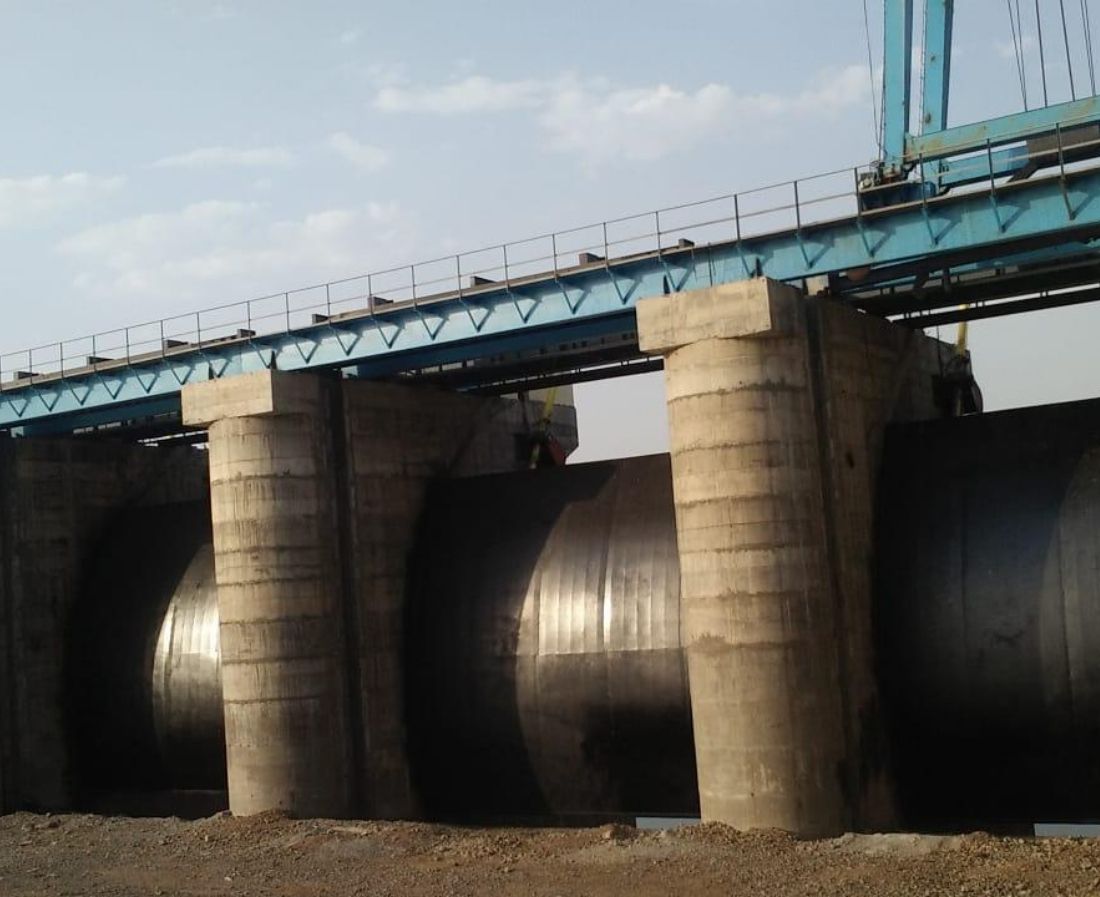
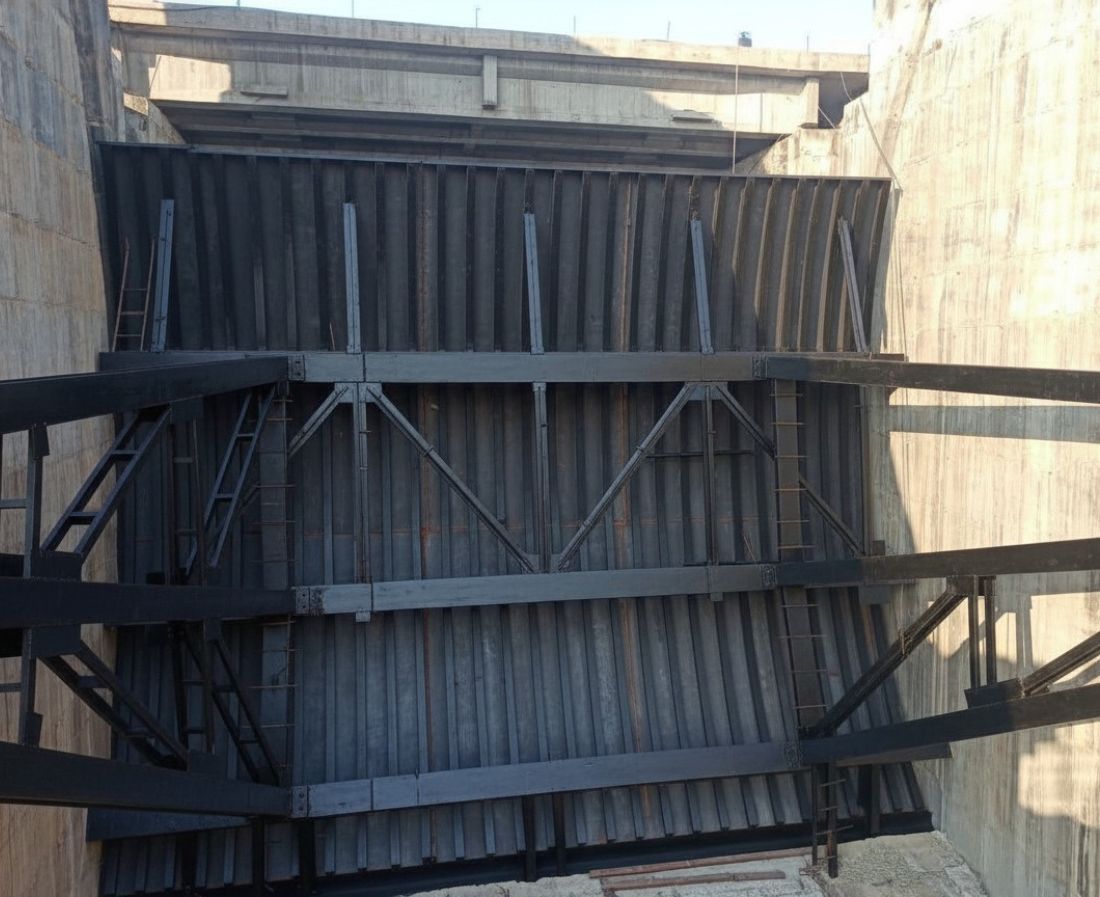
A Radial Gate is used in dams, barrages, and canal structures to control the flow and level of water. The gate consists of a curved (circular arc) skin plate supported by radial arms and trunnion bearings, allowing the gate to rotate smoothly when operated.
Working Principle: The curved face of the gate helps balance the water pressure, reducing the force required to lift or lower it. The gate rotates about trunnions (hinge points) fixed in the side piers. The curvature of the gate directs the water pressure toward these trunnions, minimizing bending stress on the structure.
Main Components
- Skin Plate: Curved surface plate that retains the water pressure.
- Radial Arms: Structural members connecting the skin plate to the trunnion.
- Trunnion Assembly: Bearing support that allows the gate to rotate smoothly.
- Seals: Rubber or neoprene seals used to ensure watertight closure.
- Hoisting Arrangement: Hydraulic or electric hoist system used to raise or lower the gate.
Advantages
- Efficient in handling high water pressure with minimum structural stress.
- Lighter in weight compared to vertical lift gates.
- Smooth and reliable operation with lower power requirement.
- Easier maintenance and longer service life.
- Suitable for large spans and high-head applications.
Applications
- Dam spillways and weirs
- Powerhouse intakes
- Irrigation and flood control structures
- Canal head regulators and diversion works.
Design Considerations
- Hydrostatic and hydrodynamic water pressure
- Self-weight and hoisting load
- Safety provisions for operation and maintenance



